"The likelihood that life was created in an organic soup is the equivalent of discovering a computer on Mars and proclaiming it was randomly assembled in the Methane Sea." -Rhawn Joseph, Ph.D.
If Life were to suddenly appear on a desert island we wouldn't claim it was randomly assembled in an organic soup or created by the hand of god; we'd conclude it washed to shore or fell from the sky. The Earth too, is an island, orbiting in a sea of space, and living creatures and their DNA have been washing to shore and falling from the sky since our planets creation.
Only life can produce life. Thus we must conclude that the first creatures to appear on Earth, journeyed here from other planets [13,14,15].
Five billion years ago, a massive star circled by planets teaming with life, exploded in a vast supernova, casting the shattered remnants of its solar system into the wilds of space. Trillions of tiny creatures and their DNA, survived this cosmic cataclysm, frozen in oceans of ice and water or buried deep within mountains of planetary debris which were flung into the abyss.
Innumerable microbes instantly reacted by forming heat shock proteins or cold-shock proteins which wrapped around and protected them and then entered a state of dormancy only to reawaken after millions of years had passed. Yet others continued to flourish and thrive buried miles beneath the surface of planetary debris. And then after hundreds of millions of years those who survived, or their progeny, were flung upon a new world, the Earth, and they went forth to multiply.
These tiny creatures, and their DNA, labored to alter the environment, and the changing environment acted on gene selection, such that, after 4 billion years had passed, these tiny creatures, and their DNA, began to recreate and replicate, increasingly complex creatures which long ago lived on other planets.
The first Earthlings were visitors from the stars.
SUPERNOVA: THE BEGINNING BEGINS
Life gives birth to life, and stars give birth to stars in an endless cycle of death and rebirth. It is a cosmic dance which may have been ongoing for all eternity.
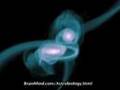
Birth and death are part of the cycle of life. Some stars give birth as they die; exploding in a vast supernova and spawning hundreds of infant stars [16,17,18].
Stars consume hydrogen which is converted to helium through nuclear fusion [19,20]. When their supply of hydrogen fuel begins to wane, stars cease to generate energy and shrivel up, growing smaller, wasting away until they explode or collapse, and die [20, 21,22].
Normally the equilibrium of a star is maintained by the conversion of hydrogen into helium. Within our own sun, 685 million tons of hydrogen is converted to helium each second [23]. The nuclear fusion and conversion of these gasses releases tremendous thermal energy creating an outward pressure which prevents the gravitational collapse and implosion of the star [24,25,26].
As the star grows old the supply of hydrogen fuel begins to dwindle, and they cease to generate as much energy, lose mass, and grow smaller in size. Equilibrium is lost, and the star begins to collapse, making them smaller, but denser, which raises temperatures. Giant star many times the size of our sun, generate incredible amounts of energy as they shrink, igniting the remaining helium and triggering a nuclear reaction and a supernova explosion [24-29].
{INSERT FIGURE/IMAGE HERE}
These super explosions can light up an entire galaxy. Typically, the explosion creates tremendous shock waves, shattering surrounding planets, and expelling most of the star and remaining planetary debris into the surrounding interstellar medium. This debris forms a dense cloud of gas and matter [30,31,32]. Over thousands of years and in response to cosmic shock waves, the debris within these clouds begins to clump together, generating tremendous amounts of energy as they grow larger and denser, until finally they ignite, creating hundreds even thousands of proto-stars [16-18].
Examples of this cosmic reproductive cycle of death and rebirth are all around us.
The ancient star of Orion grew old and exploded in a vast supernova millions of years ago, becoming the largest star factory in the Heavens [33-35]. Some of these infant stars may be growing planets which may already harbor life. Others are being destroyed, blow torched and burned to death by a blistering flood of ultraviolet radiation from the region's brightest star [36,37].
{INSERT FIGURE/IMAGEs HERE}
Thousands of stars were produced by a supernova and nebula in the area of Scorpio which have now spread out over hundreds of light years, migrating across the constellations of Scorpius, Centarus and Crux in the southern skies [38-40]. These are the survivors, formed from the remnants of an ancient parent star whose planets may have also harbored complex life.
Our sun and the rocky debris which formed the Earth, were produced in an identical fashion [41-44].
NOT ALL RED GIANTS ARE CREATED EQUAL
There are stars twinkling in the darkness of night which are a thousand times larger than our own sun. In our own galactic neighborhood these include KW Sagitarii, V354 Cephei, and KY Cygni, each of which is over 1,500 times as large and contain the mass of 150 of our sun. Another heavy weight champion is Eta Carinae which is just 7,500 light years away, and weighs over 100 solar masses. It's 4 million times as bright as the Sun. Eta Carinae is the most luminous star we know of and it's extremely hot - 25,000 Kelvin.
VY Canis Majoris, a red hypergiant star in the constellation Canis Major, is more than 2,100 times the size of the Sun. Placed in our Solar System, its surface would extend out past the orbit of Saturn.
The largest stars are the cool supergiants. For example, VY Canis Majoris is only 3,500 Kelvin.
Stars lose mass over time, which is blown away by its solar wind. However, as the star begins to die and becomes a red giant, its loses matter at an accelerated rate.
The super red giant Eta Carinae is so large it casts off 500 times the mass of the Earth every year. Eta Carinae is in its death throes and will soon explode as a supernova. It is already surrounded by a nebular shell comprised of dust, gas, and other material swept into space by its powerful solar wind.
A star become a red giant after it has used up most of its hydrogen fuel. This causes the star to contract and then collapse from its own weight.
As hydrogen is used up it is converted to helium, eventually, a helium core forms. However, as Hydrogen dwindles the nuclear reactions radiate outward creating an expanding pressure in the upper layers. Simultaneously the core loses support and mass and then collapses even as the star grows larger in size.
The collapse of the core generates more energy and increases the radiation pressure outward, expanding the star and making it grow increasingly larger in size and becoming a red giant. Thus, the red giant may have a diameter 10 to 1000 times that of our sun and many times its original size. Luminosities may increase by 1 million times. However, because they are running out of hydrogen fuel, in consequence, they become cooler and may come to have a surface temperature of less than 2000-3000șC.
Thus, as they expand life will not necessary be burnt out of existence and extinguished on those planets which orbit the star. When medium mass stars explode, some of their surrounding planets may suffer fragmentation but not necessarily obliteration.
Although many times their original size, much of the mass of the star has in fact been ejected into space long before they explode. The mass is carried away by the star's solar wind which form a shell at the outer edge of the solar system, creating a nebula.
LOW MASS VS HIGH MASS STARS: SUPERNOVA VS WHITE DWARF
Stars the size of our own sun do not explode as supernova or nova unless they have a binary companion. Stars similar to our sun may live 10 or more billion years. When they begin to run out of hydrogen fuel they will quickly lose mass which is ejected into space, forming a nebulae ring. These stars do not explode but instead implode and become a white dwarf surrounded by the ejected gas and dust of the nebula.
The most massive, destructive explosions are produced by stars with initial masses 8 times that of our sun (i.e. 8 or more solar masses). Because these super massive stars consume hydrogen at an accellerated rate, the quickly run out of fuel.
The life times of these super massive stars are relatively brief, around 1 billion years. One billion years is more than enough time for microbes to take root and flourish on any surrounding planets, but not enough time for complex multi-cellular life to develop.
Exploding stars which initially contained 8 or more solar masses may produce a few giant stars or hundreds of proto stars which may eventually become the size of our own sun.
THE MEDIUM MASS PARENT STAR
Stars which are several times larger than our sun, but less than 8 solar masses may also explode in supernova, though the resulting explosion is much less powerful or dramatic. Instead of hundreds of proto stars, they may produce fewer than a dozen.
It is believed that only 4 to 5 stars were produced by the supernova which gave rise to our own sun. If true, this indicates that the parent star though certainly many times larger than our sun, was also much less than 8 solar masses.
These less massive stars spend billions of years in a steady state. This is due to the reduced energy requirements as contrasted with stars greater than 8 solar masses.
If the parent star in fact produced less than 5 stars all similar to our sun and was of intermediate mass, then it may have lived from 6 to 8 billion years before entering the red giant stage.
Our Sun is less than 5 billion years old and the Earth is only 4.6 billion years young. Thus, 6 billion years is more than enough time for complex, intelligent life to evolve.
And then after 6 or more billion years and depending on its initial mass, the parent star, like other medium mass stars, began to run out of hydrogen fuel. It then underwent the same dramatic changes as its higher mass cousins.
As it grew in size, losing mass in the process, its stellar wind becames stronger, enriching the surrounding stellar space with elements from within the star as its mass bled into space.
As the parent star became a red giant the core began to collapse, and it became more luminous even as its surface layers, the corona, became cooler--making the star increasingly unstable. More and more surface material, gas and dust, was blown into space forming a dense and powerful solar wind that enveloped and buffeted the planets of its solar system.
It is at this point that millions then trillions of microbes began to abandon ship and escaped their home planets. They were carried to safety, to the far corners of the expanding star's solar system, by the increasingly dense and powerful solar winds which blew away the atmospheres of the surrounding planets which then became part of the dust and debris being hurtled to the edges of the solar system. There these expelled microbes began to congregate within the great clouds of dust forming the growing nebula which ringed the dying solar system and the glowing red giant at its center.
LIFE IN THE UPPER ATMOSPHERE
Thousands of distinct species of bacteria thrive and flourish within the Earth's atmosphere. Air is an ideal transport mechanism and serves as a major pathway for the dispersal of bacteria, virus particles, algae, protozoa, lichens, and fungi including those who dwell in soil and water. The diversity of microbes living in the Earth's atmosphere is probably equivalent to the diversity found within the ocean and the soil.
Clouds are ideal habitats for innumerable species of microbe as they contain water, oxygen, CO2, and are exposed to light. Bacteria and living spores have been recovered by NASA, the US Airforce, and military reconesence planes including the U-2 aircraft, at stratospheric heights of up to 15 kilometers. Even at higher altitudes, the Earth's atmosphere contains tremendous amounts of dust which undoubtedly contains bacteria.
The atmosphere, although largely tethered to our planet by the Earth's magnetosphere, slowly leaks into space. This is caused by an interaction between the solar wind and the Earth's magnetic field near the north and south pole. This interaction impacts oxygen, helium, and hydrogen ions, giving them enough of an impact and sufficient energy to accelerate into space. It is unknown if microbes or viral particles are carried off as well.
However, on September 22- 25, 1998, a huge gust of solar wind accompanied by energy bursts from the Sun, created a shock wave which smacked the polar regions with sufficient force to cause oxygen and other gases to gush from the Earth's upper atmosphere into space. It could be predicted that microbes attached to dust particles may have also been swept away.
The Earth's magnetic field and the solar winds are in a state of equilibrium. Thus the atmosphere and the microbes which flourish within, remain Earth-bound. The same can be predicted for any Earth-like planet orbiting distant stars.
This balance, however, is irrevocably altered when the sun begins to die. It is these conditions which contributed to the origin of life on Earth.
DEATH STAR & THE SOLAR WIND:
As the parent star neared the end of its life, it entered the red giant phase. The outer layer, the corona began to heat up and increase in size. At the same time the star began to lose mass which streamed from the star in the form of an increasingly dense and clumpy solar wind which filled the interstellar medium with dust, gas and other material that has been processed inside the star.
As the parent star slowly died, its wind began to accelerate. The wind blew in powerful gusts as the hot corona streamed out in bursts of transonic plasma particles. The wind was accompanied by Alfven waves generated from the surface of the sun which interacted with and accelerated and heated the solar wind blowing it to the farthest corners of the heliosphere at which point these waves began to dissipate leaving a massive cloud of dust and debris in their wake.
In consequence, the atmospheres of the inner terrestrial planets were ripped from their magnetic moorings by this increasingly powerful and dense solar wind. The atmospheres were blown into space and to the far reaches of the solar system along with trillions of air-born bacteria, spores, fungi, and other microbes.
Normally, such creatures might be too heavy to be lofted into space and carried away. But under red giant conditions, the powerful solar wind blew like a cosmic hurricane, taking with it the atmosphere, water molecules, surface dust, and all the bacteria and other creatures which clung to these molecules and the millions of pounds of particles lifted from the ground or which normally filled the air. Dust and microbe were hurled into space and were swept into the cosmic dust cloud which was becoming a giant shell surrounding the outer edge of the dying solar system.
Certainly, trillions of microbes would have died as they journeyed through space. However, trillions would have lived. Microbes and spores are so small that even when bombarded with photons and deadly gamma and UV rays the likelihood that they would be struck is infestimally minute. Tiny targets are hard to hit. Even if struck, the radiation dose would also be minute and the damage might not be fatal. Some species of microbe, such as Deinococcus radiodurans, are radiation resistant and can quickly rebuild their genome even if shattered by UV or gamma rays.
Further, as the solar wind emmanating from the dying star was dense with dust, innumerable microbes could hitch a ride and attach themselves to these dust particles--particles also too small to be hit by photons but the perfect size to reach escape velocity and become part of the growing nebular cloud.
When the parent star exploded, viruses, spores and trillions of microbes would have easily survived, protected by heat-shock and cold-shock proteins, and the dense nebular shell which surrounded the dying star.
And then within a few million years, new stars and then new planets began to form within these nebular clouds already thick with microbial life. These tiny creatures who had found safe harbor within these nebular rings, then took root on these newly forming worlds, and then went forth to multiply.
THE BIRTH OF THE SUN & SOLAR SYSTEM
Five billion years ago, a giant star, likely ringed with planets some just like our own, exploded in a vast supernova, giving birth to less than a dozen new, proto stars, including our own sun.
When this ancient, parent star exploded, its closest planets were baked, fried, burned and blasted apart into gas, dust, and moon-sized islands of debris. Shock waves and the force of the explosion cast the remnants of this ancient star and its planetary system into the wilds of space, forming a giant swirling molecular cloud consisting of gasses, dust, microbes, viral particles, oceans of ice, and asteroids and meteors hundreds, even thousands of miles in size [45,46]. {INSERT FIGURE/IMAGES HERE}
Within a few thousand years this titanic molecular cloud began to condense and form planetary nebula, also known as "cometary knots" due to their resemblance to planet-size comets [47,48]. Because of gravitational pressures and cosmic shock waves, eventually many of these planetary nebula condensed and collapsed forming less than a dozen bright burning proto-stars surrounded by clouds of gas, oceans of frozen water, and mountains of stellar debris.
Thus, our sun was born among a cluster of sister stars some of which survived and are now likely ringed with planets just like our own.
As the spinning molecular clouds of gas, hydrogen, dust and massive debris collected and collapsed together, it began to rotate faster and raster, like a spinning ice skater drawing in her arms. Debris from the parent star and its shattered planets began colliding and collected together, collapsing, growing denser, becoming hotter and growing in size, eventually forming proto-stars [47-49].
Within a brief moment of time, ranging from 1 million to 50 million years [50-54], the pressure and density of hydrogen in the centre of each proto star, became great enough and temperatures hot enough that it triggered a thermonuclear reaction, with the exploding, expanding thermal energy countering the gravitational forces of contraction thereby creating equilibrium and a full blown star, our sun [55,56].
{INSERT FIGURE/IMAGEs HERE}
BIRTH OF THE PLANETS
As thermonuclear equilibrium was established, gas, dust, heavy metals, and giant masses of rocky debris, continued to swirl around our new sun--the remnants of the dead parent star and its broken, shattered planets which gave birth to our own. A proto-planetary disk consisting of gases, dust, islands of frozen water, and moon-sized rocky debris began to flatten out and clump together as it swirled about the sun [57,58,59].
A solar wind began to blow from the burning sun, dispersing and blowing the lighter gaseous elements to the far edges of the solar-proto-planetary disk [60,61]. Debris with the highest melting points, such as silicates and metals, formed the inner rims of the planetary disk, congregating together to create the rocky, heavy metal inner terrestrial planets including the Earth [62,63]. Thus, the Earth is comprised of the shattered remnants of the parent star and its rocky inner planets.
By contrast, water, gasses and lighter elements and compounds were more resistant to the gravitational effects of the still growing sun, but more susceptible to its heat and the solar wind which swept through the infant solar system. Thus these volatile icy compounds and incredibly toxic, poisonous gasses were blown far away and remained at a greater distance from the sun, eventually freezing and becoming part of the big gaseous planets Jupiter and Saturn [64-68].
Planet formation proceeds at a relatively rapid pace, from a few hundred years for a small rocky planet the size of the Earth to one million years for Jupiter and Saturn-sized gas giants [69-72].
Thus, around 4.6 billion years ago, the Earth and the other planets were formed from the remnants of the dead parent star, and amongst microbe-hugging debris which formed the initial nebular ring, and began to orbit in the same direction around the sun.
Computer models and observations of planet-formation have given us a clear understanding of the mechanisms involved [64-75]. It is believed that within just a few thousand years the remnants of the supernova which surrounded our new sun, began to flatten out into a swirling circular proto planetary disk. After just a few spins around the new proto-star, islands of debris began to collide and clump together forming jagged moon-like planets increasing in size by accretion as they orbited our sun.
{INSERT FIGURE/IMAGE HERE}
According to the most conservative estimates, if mechanisms of accretion are very slow, it could take up to a million years for a massive solid planetary core to form. Then it would quickly snow ball in size through clumping and as debris continued to crash into it [72-75].
Thus multiple planets can form in a relatively short space of time, within the first million years after the birth of the sun. Hundreds of planets have now been detected orbiting distant stars [76-77] which suggests similar mechanisms of planet formation take place throughout the cosmos in less than a million years.
A million years is more than enough time for any surviving life forms contained in the remnants of the parent star's shattered planets to find safe harbor within a new world made up of this debris. Some microbes become dormant and can rewaken even after 250 million years [78-80]. In fact, only one microbe had to survive, and once on Earth, or another suitable world, could cover the planet in bacterial offspring within a few months.
ORIGINS OF EARTHLY LIFE
Our solar system is the child of an ancient exploding star which had been likely ringed with planets crawling with all manner of life, the remnants of which formed the Earth, our sun, and the planets of our solar system. Naturally, any survivors of this cosmic cataclysm, those buried within mountains of debris, would have also become part of these newly forming planets.
Indeed, consider the Earth with its trillions of microbes buried beneath the soil, at the bottom of the sea, and living in every conceivable environment, from boiling hot-springs to well below zero [81-85]. If the Earth were shattered and broke apart, innumerable creatures would survive, many becoming dormant, others living comfortably deep within 400 mile wide debris. Even if subjected to extreme heat or subzero temperatures, some of these microbes would instantly form protective heat-shock or cold-shock proteins. And if these mountains and frozen oceans of ice were to crash upon the surface of a suitable planet, some of these creatures would survive.
Seven different meteors containing fossils of ancient microbes have in fact crashed to Earth [85-92]. Many were blasted into space by a supernova [93-96]
{INSERT FIGURE/IMAGES HERE}
Ancient meteors which have fallen to Earth are peppered with elements generated by an exploding star [93-96]. These include the decay product of Iron-60 and a rare isotope, sulphur-36 which is produced by the radioactive decay of chlorine-36. Sulphur 36 and Iron 60 are the residue of supernova, and were found in meteorites that had circled the Sun for millions of years before falling to Earth [93-96].
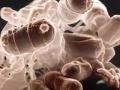
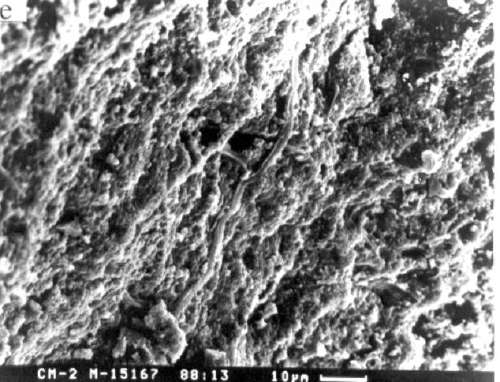
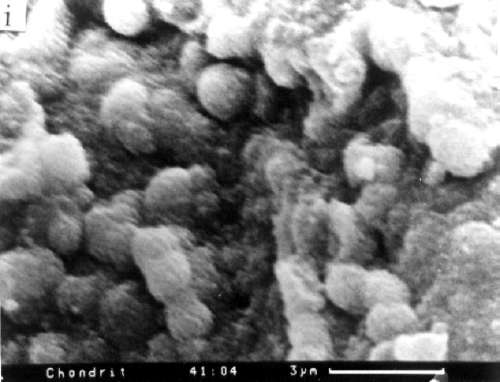
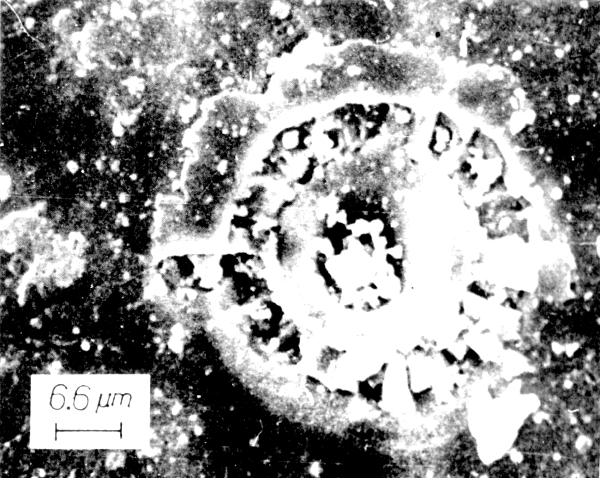
Yet other meteors are peppered with grains produced by this titanic explosion [97,98]. The Murchison meteorite, a carbonaceous chondrite from outside our solar system contains not just grains [98] but fossils of microbial life [85.86].
{INSERT FIGURE/IMAGES HERE}
In fact, microbial fossils have been found in 5 different carbonaceous chondrites, the Murchison [85,86], Ivuna [87], Orgueil [88,89], Allende [90,91], and Efremovka [92] meteors. Carbonaceous chondrites contain water [99, 100]. These meteors are associated with comets [100,101] which are surrounded by water and ice [102-105]. And where there is water, there is life.
Russian scientists, V.I. Vernadsky and G.A. Zavarzin, who studied the Efremovka [92], concluded that microbial life was present well before the formation of the solar system, nearly 5 billion years ago. Presumably, these meteors and their living cargo, are the remnants from that star system which gave birth to our own. What sort of creatures could survive a supernova cosmic disaster? Trillions, including what are called "extremeophiles." When threatened with death, extremeophiles will become dormant and can form heat-shock proteins or cold-shock proteins which wrap around and protect them from the infernos of hell or the subzero temperatures of space [106-110]. And then, even after hundreds of millions of years have passed, if flung upon a new world, these microbes can awaken from their death-like slumber, and then go forth and multiply.
{INSERT FIGURE/IMAGES HERE}
WHERE THERE IS WATER THERE IS LIFE
Our planet was formed around 4.6 billion years ago [111,112]. For the next 800 million years our world was bombarded by the remnants of the parent star and its shattered planets, growing in size, alternately melting from the heat generated by the non-stop pounding and then cooling as oceans of ice rained down upon it.
Within a few hundred million years after its formation, a huge planetary body over 4000 miles in size, struck the earth [113], casting out a huge chunk of debris which became the moon [114, 115]. The huge gash in the planet would later become filled with oceans of ice falling from space, the watery remnants of the ancient star system that had been destroyed.
{INSERT FIGURE/IMAGES HERE}
The outer edge of our solar system is still surrounded by dense clouds of comets composed of frozen water and ice [116-118]--the ejecta from the shattered planet star. These form what is known as Kuiper belt, which consists of meteors, asteroids, and icy comets [119-121].
At the outer limits of the Kuiper belt orbits the Oort cloud which is believed to consist of frozen oceans of ice [122,123] which had been boiled away or splashed into space when their home planets were burned and shattered. The Oort cloud is the source of comets and water-bearing meteors which rain down upon the solar system, delivering water to the surface of all the planets including the Earth [125-127].
{INSERT FIGURE/IMAGE HERE}
And where this is water, there is life. Indeed, even a simple droplet of water contains myriad life forms [128-130], many of which could survive by forming cold-shock or heat-shock proteins [131-133] or by becoming dormant for millions of years, only to come back to life [134-137].
Again, fossils of microbes have been discovered in five different carbonaceous chondrites from outside the solar system which contain high concentrations of water. These fossil-bearing meteors include the Murchison which is peppered with grains formed from exposure to a vast supernova.
For the next 700 million years mountains of stellar debris bombarded the Earth and the other planets [138-140]. The mass of the Earth began to grow in size, becoming denser and hotter, melting together and spewing out toxic gasses [141-144].
The new Earth, however, was initially without oceans, water, oxygen, or an atmosphere. Instead, initially, the entire Earth was a blazing inferno, continually melting from the heat generated by the mountains of debris pummeling the planet [141-147].
However, oceans of ice and watery comets also rained down on the Earth. It rained water from space for hundreds of millions years, slowly cooling the raging infernos, and filling the cratered planet with oceans, lakes, and rising seas [149-150]. And where there is water, there is life.
{INSERT FIGURE/IMAGE HERE}
Thus we see evidence of complex microbial life in banded iron formations and bedrock, discovered in northern Quebec, over 4.2 billion years in age and which formed in the presence of water [151]; a time when giant meteors, comets and asteroids were slamming into the planet which was alternatively melting and freezing.
By 4.2 billion years ago, as life containing debris slammed into the young Earth, our planet was cooling, becoming watery and may have already begun harboring complex microbial life [151].
{INSERT FIGURE/IMAGE HERE}
COLONIES FROM SPACE: ALIEN LIFE CONQUERS THE NEW PLANET
As the oceans continued to rise, and by 3.9 billion years ago, living creatures had proliferated upon the surface of the planet which had cooled and solidified sufficiently to retain evidence of their passage. These creatures were "structurally complex" and appeared on Earth immediately following a 700 million year bombardment from space [152,152].
These visitors from the stars were found in rock formation located in West Greenland, and the nearby Akilia island and are believed to be almost 3.9 billion years in age [152-153].
{INSERT FIGURE/IMAGE HERE}
What type of creatures could withstand a journey through space, and take up residence inside rocks? An incredible number, including: archae, cyanobacteria, and blue-green algae which happily thrive deep within rocks and stone, even under subzero temperatures [154-160]. Blue green algae are believed to be among the first to take up residence on Earth, and in 1961, algae were discovered in a meteor from space [161]. However, these findings were dismissed as due to contamination. And yet, how did life originate on Earth, if not from contamination?
Bacteria rapidly proliferate [162], and within a few weeks, if unhindered they could cover the entire planet with a thin sheet of bacterial cells [163]. However, many species of bacteria prefer to live in colonies [164-165].
By 3.5 billion years ago the first colonies from space formed stromatolites [166-168]. Stromatolites are comprised of silicified micro-organisms, including photosynthesizing cyanobacteria such as blue green algae [169]. Algae form stromatolites in shallow water by trapping, binding, and cementing together grains of sediment.
{INSERT FIGURE/IMAGE HERE}
Algae were not alone. By 3.5 billion years ago a vast array of prokaryote microbes, extremeophiles, cyanobacteria and archaeans had begun to overrun the new Earth, leaving their fossilized remains immortalized in ancient rocks [170-174].
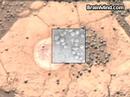
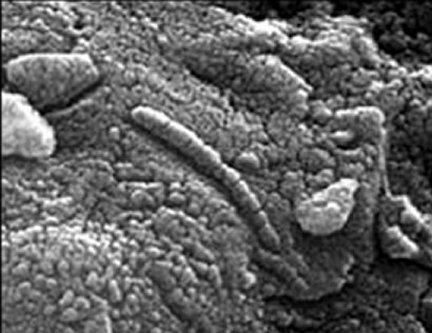
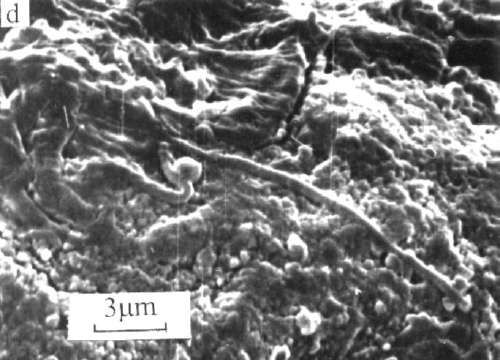
These 3.5 billion year old fossils look identical to modern day bacteria [175] and remarkably similar to micro-fossils discovered in an ancient meteorite from Mars that is over 4 billion years old [176]--about the same age as the first evidence of life on Earth.
{INSERT FIGURE/IMAGE HERE}
Therefore, as early as 4.2 billion years BP, and by 3.5 billion years ago, the planet was crawling with life, even though the Earth was still largely toxic, convulsed with volcanic activity, and all the necessary elements necessary for creating a nutrient rich organic soup were completely absent.
THE SOLAR WIND, NAKED DNA & THE EARTH'S ATMOSPHERE
There is no evidence that life can be produced from non-life. As detailed in chapter 2, every attempt to prove otherwise has failed. As only life can produce life, we must conclude these first living creatures arrived here from other planets.
Moreover, the early Earth lacked all the essential ingredients for the creation of DNA which is the machinery of life. Even if all the elements necessary for creating DNA were present, naked DNA would have been instantly destroyed by the UV rays [177,178] which bore down upon the new Earth which lacked any semblance of protective ozone or an atmosphere [179,180].
The new and growing Earth was devoid of an atmosphere and was too hot for water to condense. Water was vaporized into a mist, and this watery mist, as well as oxygen, and highly toxic, poisonous gasses were swept into space by the powerful solar wind emanating from the Sun [180-183].
The solar wind is radiated from the sun as a continuous stream of charged plasma particles [184-185]. This wind creates a tenuous solar atmosphere and a protective plasma bubble (the heliosphere) that spreads out and permeates and encloses the entire solar system [184-188]. This interplanetary medium, the heliosphere serves to protect the solar system and our planet, from deadly life neutralizing, cosmic rays [189-190].
{INSERT FIGURE/IMAGES HERE}
However, the solar wind and the UV rays from the sun also burned and swept away the Earth's water and atmosphere, as well as all toxic poisonous gasses which might have proved deadly to any microbial survivors [191-192]. At the same time it was frying the planet with UV rays, the sun's solar wind protected the Earth from life neutralizing cosmic rays, forming a protective bubble of charged particles, the heliosphere [184-188].
Therefore, although naked DNA would have been instantly destroyed by UV rays, the solar wind allowed the survivors to venture forth, multiply, and to begin genetically engineering the Earth and make it hospitable for more complex forms of life.
Because the new Earth was without oxygen, water, or an atmosphere, only the hardiest of creatures, and those already adapted to feasting on silicates and metals in the absence of oxygen or an atmosphere, would have found the new Earth to be a habitable planet. In fact, on the modern Earth, a trillion microbes, and their DNA, flourish and multiply under exactly these conditions [191-194].
Since the initial atmosphere had been blown into space by the solar wind, the replacement atmosphere came from 3 primary sources [195-200]: Gasses released from within the earth. Oceans of frozen water striking the planet. Iron-eating and mineral-eating microbes which released various gases, including oxygen, as a waste product. Thus, much of the Earth's new atmosphere was produced and maintained, biologically [200-202].
Thus those microbes which unwillingly hitch-hiked to the new Earth immediately began digesting the planet and excreting gasses, oxygen, and magnetite as waste products, creating an atmosphere, and preparing the planet for those creatures yet to be born.
THE EARTH'S MAGNETIC FIELD
Of all the planets in our solar system, only the Earth was ideally suited for genetic engineering and maintaining a developing atmosphere capable of sustaining increasingly complex life. This was made possible in part by the Earth's magnetic field which extends tens of thousands of miles into space, forming a protective magnetosphere [203-205].
{INSERT FIGURE/IMAGES HERE}
The Earths magnetic field is produced by electric currents generated by the planet's liquid metal core [203-207], and supplemented by mountains of magnetite secreted by iron and other mineral eating microbes [208]. As the magnetosphere grew in strength, it began to deflect the sun's powerful solar winds [209,210]. Whereas initially the Earth's atmosphere was blown away into space, the growing strength of the magnetosphere enabled the replacement atmosphere to remain tethered to the young planet.
Mars has a very weak magnetic field, and the solar wind causes the Martian atmospheres to continuously bleed away into space [211]. By contrast, the Earth's magnetic field was able to protect its newly developing atmosphere from the solar wind keeping it bound to Earth.
Because of the rotating Earth's circular orbit and distance from the sun there was no danger of the entire planet freezing or burning. Thus, the Earth was an ideal environment for the metamorphosis of complex life. Microbial life began to flourish.
THE GENETICALLY ENGINEERED EARTH
The first creatures to appear on this planet began to genetically engineer the Earth in preparation for those yet to be born. And they did this by altering the soil and the contents of the rising seas. Bacteria engaged in photosynthesis and released oxygen and other gasses as a waste product, thereby providing the Earth with an oxygen atmosphere which generated ozone and shielded the Earth from the sun's life-neutralizing UV rays [212-214]. This enabled oxygen breathing creatures to venture upon the surface of the planet, leading to an explosion of increasingly complex land-based life.
Yet others liberated phosphates, sugars, nitrogen and ammonia from the soil playing a major role in the carbon cycle, preparing the land for plants and complex soil dwelling animals. Microbes also secreted all manner of enzymes which could be used as sources of energy by later emerging complex species. Indeed, then as now, microbes make up the majority of the living biomass on Earth and, as such, have major roles in the recycling of elements vital to life [215,216].
Hence, the basic chemistry of Earth's surface, its oceans, and atmosphere were determined by biological activity, that of the trillions of microbes who dwell in soil and water; creatures whose ancestors journeyed here from the stars.
This biological activity was not random, but under genetic control. The first creatures to appear on Earth, and their progeny, had genetically engineered the planet in preparation for those yet to be born.
******