BrainMind.com


Neuroscience
Head Injuries, Limbic System, Basal Ganglia,
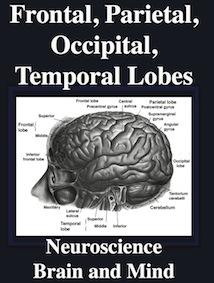
Frontal, Temporal, Parietal, Occipital Lobes
Right & Left Hemisphere

Hardback & Paperback Books

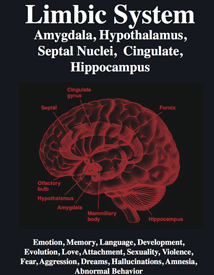
Limbic System: Amygdala, Hippocampus, Hypothalamus, Septal Nuclei, Cingulate
ADVANCED TEXT: Emotion, Cognition, Memory, Development, Language, Abnormal Behavior…
Head Injuries, Concussions & Brain Damage: Cerebral and Cranial Trauma, Skull Fractures….
Basal Ganglia, Brainstem, Cerebellum, Striatum, Thalamus: Caudate, Putamen, Globus Pallidus...
Frontal Lobes: Neuroscience, Personality, Emotion, Language, Alien Hand, Free Will….
Buy From Amazon
Buy From Amazon
Buy From Amazon
Buy From Amazon
Buy From Amazon

Neuroscience
Neuroscience Neuropsychology, Neuropsychiatry, Behavioral Neurology - E-Books
Neuroscience: Neuropsychology, Neuropsychiatry. Introduction...
The Frontal Lobes: Neuroscience, Neuropschiatry, Neuropsychology, Neurology...
Parietal Lobe: Body Image, Visual Spatial Perception, Language
Stroke: Thrombi, Emboli, Hemorrhage, Aneurysms, Athersclerosis, TIA, CVA...
Basal Ganglia, Striatum, Thalamus, Caudate, Putamen, Globus Pallidus, Brainstem...
Limbic System: Hypothalamus, Amygdala, Hippocampus, Cingulate...
Temporal Lobe: Language, Memory, Emotion
Head Injuries, Skull Fractures, Concussions, Contusions, Hemorrhage, Coma...
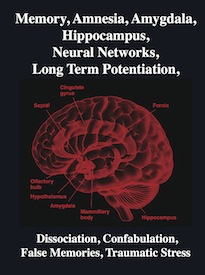
Memory, Amnesia, Amygdala, Hippocampus, Neural Networks…
Free Will and the Frontal Lobes: Loss of Will, Against the Will…
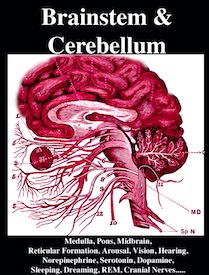
Brainstem and Cerebellum: Medulla, Pons, Midbrain....
Right Hemisphere, Left Hemisphere, Consciousness, Unconscious Mind....

Developmental Neuroscience E-Books
Fetal Cognitive & Brain Development: Normal & Abnormal
Child & Infant Emotional & Cognitive Brain Development
Neuroscience.
Brain & Mind
Introduction, Primer
Development of Consciousness, Language, Emotion & Thought

Consciousness
Development, Quantum Physics, Neuroscience E-Books
Buy From Amazon
Buy From Amazon
Buy From Amazon
Buy From Amazon

Infinity - The Big Bang
Extinctions
E-Books

Infinite Universe: Quantum Physics of Infinity
Extinctions: History, Origins & Future of Mass Extinctions
The Big Bang: A Critical Analysis...


BrainMind.com News


Source: Saint Louis University

Human's Best Friend: Time Alone With Dogs Decreases Depression & Loneliness, January 12, 2006 A new Saint Louis University study shows there is some truth in the old cliché that describes a dog as "man's best friend."

"Or at least a less aggravating friend," said study author William A. Banks, M.D., professor of geriatrics in the department of internal medicine and professor of pharmacological and physiological sciences at Saint Louis University School of Medicine.

Nursing home residents felt much less lonely after spending time alone with a dog than they did when they visited with a dog and other people. The research will be published in the March 2006 issue of Anthrozoos 18(4).

"It was a strange finding," said Banks, who also is a staff physician at Veterans Affairs Medical Center in St. Louis. "We had thought that the dog acts as a social lubricant and increases the interaction between the residents. We expected the group dog visits were going to work better, but they didn't.

"The residents found a little quiet time with the pooch is a lot nicer than spending time with a dog and other people," he said.

Thirty-seven nursing home residents who scored high on a loneliness scale said they wanted to receive weekly, 30-minute visits from dogs. Half spent time alone with the dog, and the other half spent time with one to three other nursing home residents and the dog. While both groups felt less lonely, the group that had one-on-one quality time with the dog experienced a much more significant decrease in loneliness after five to six weeks of visits.

The main way pets reduce loneliness in nursing homes is simply by being with people, not by enhancing socialization between people – for instance, giving nursing home residents something to talk about or an experience to share, Banks said.

"There is no need for a dog to be a social lubricant or icebreaker in a nursing home. Residents live with each other, eat breakfast, lunch and dinner with each other, play bingo with each other," Banks says. "The study also found that the loneliest individuals benefited the most from visits with dogs."

BrainMind.com - Contents