BrainMind.com


Neuroscience
Head Injuries, Limbic System, Basal Ganglia,
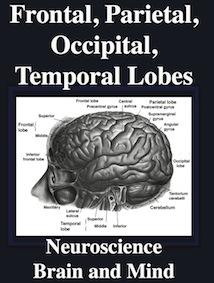
Frontal, Temporal, Parietal, Occipital Lobes
Right & Left Hemisphere

Hardback & Paperback Books

Limbic System: Amygdala, Hippocampus, Hypothalamus, Septal Nuclei, Cingulate
ADVANCED TEXT: Emotion, Cognition, Memory, Development, Language, Abnormal Behavior…
Head Injuries, Concussions & Brain Damage: Cerebral and Cranial Trauma, Skull Fractures….
Basal Ganglia, Brainstem, Cerebellum, Striatum, Thalamus: Caudate, Putamen, Globus Pallidus...
Frontal Lobes: Neuroscience, Personality, Emotion, Language, Alien Hand, Free Will….
Buy From Amazon
Buy From Amazon
Buy From Amazon
Buy From Amazon
Buy From Amazon

Neuroscience
Neuroscience Neuropsychology, Neuropsychiatry, Behavioral Neurology - E-Books
Neuroscience: Neuropsychology, Neuropsychiatry. Introduction...
The Frontal Lobes: Neuroscience, Neuropschiatry, Neuropsychology, Neurology...
Parietal Lobe: Body Image, Visual Spatial Perception, Language
Stroke: Thrombi, Emboli, Hemorrhage, Aneurysms, Athersclerosis, TIA, CVA...
Basal Ganglia, Striatum, Thalamus, Caudate, Putamen, Globus Pallidus, Brainstem...
Limbic System: Hypothalamus, Amygdala, Hippocampus, Cingulate...
Temporal Lobe: Language, Memory, Emotion
Head Injuries, Skull Fractures, Concussions, Contusions, Hemorrhage, Coma...
Memory, Amnesia, Amygdala, Hippocampus, Neural Networks…
Free Will and the Frontal Lobes: Loss of Will, Against the Will…
Brainstem and Cerebellum: Medulla, Pons, Midbrain....
Right Hemisphere, Left Hemisphere, Consciousness, Unconscious Mind....

Developmental Neuroscience E-Books
Fetal Cognitive & Brain Development: Normal & Abnormal
Child & Infant Emotional & Cognitive Brain Development
Neuroscience.
Brain & Mind
Introduction, Primer
Development of Consciousness, Language, Emotion & Thought

Consciousness
Development, Quantum Physics, Neuroscience E-Books
Buy From Amazon
Buy From Amazon
Buy From Amazon
Buy From Amazon

Infinity - The Big Bang
Extinctions
E-Books

Infinite Universe: Quantum Physics of Infinity
Extinctions: History, Origins & Future of Mass Extinctions
The Big Bang: A Critical Analysis...


BrainMind.com News


Source: Association for Psychological Science

Dogs, Non-Verbal Communication, & Human Evolution, March 7, 2007

Flexibly drawing inferences about the intentions of other individuals in order to cooperate in complex tasks is a basic part of everyday life that we humans take for granted. But, according to evolutionary psychologist Brian Hare at the Max Planck Institute in Germany, this ability is present in other species as well.

As Hare discusses in the April issue of Current Directions in Psychological Science, chimpanzees utilize social cues like eye gaze and face orientation to monitor others' behavior or infer motives of other subordinate or dominant individuals, or even deceive them, when competing for food. But it turns out that chimps are not very good at drawing inferences about others' mental states in cooperative situations -- such as when an experimenter (or another chimp) helpfully points to hidden food. This is a skill that humans already display in infancy, and according to Hare it seems to have evolved since the human lineage split from that of chimps a few million years ago.

For Hare, who has worked with a number of different animal species, to understand the "unique" human ability to use social cues cooperatively we should look not just at our closest animal relatives, but also at our best animal friends. While chimps may fail to infer others' mental states when cooperating, domestic dogs do quite well at such tasks. If you point to hidden food, dogs often grasp what you are trying to tell them. Puppies even do it without prior training, indicating that it is an innate ability, not simply one they acquire through contact with their owners.

What accounts for this piece of convergent evolution between humans and domestic dogs is nothing other than the process of domestication -- the breeding of dogs to tolerate, rather than fear, human company.

According to Hare, domesticated dogs' ability to solve social problems may have emerged once the brain systems mediating fear were altered -- and the same thing may have occurred in human evolution. Chimps, he says, are constrained in solving cooperative problems by their impulse to fear more dominant individuals and behave aggressively toward more subordinate ones.

"Taken together," Hare writes, "the results on chimpanzee cooperation and their use of social cues support the hypothesis that evolution in human social problem solving, much like that of dog social problem solving, occurred after changes in our species' social emotions lifted social constraints."


NeuroTheology
Click Here to Purchase
From Amazon.com

Transmitter to God
Click Here to Purchase
From Amazon.com


BrainMind.com - Contents