BrainMind.com


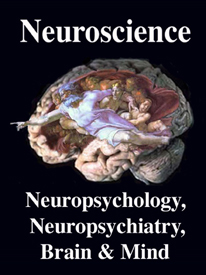
Neuroscience
Head Injuries, Limbic System, Basal Ganglia,
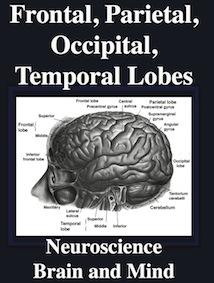
Frontal, Temporal, Parietal, Occipital Lobes
Right & Left Hemisphere

Hardback & Paperback Books

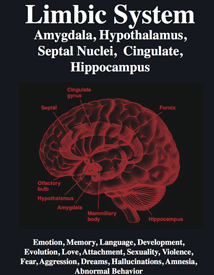
Limbic System: Amygdala, Hippocampus, Hypothalamus, Septal Nuclei, Cingulate
ADVANCED TEXT: Emotion, Cognition, Memory, Development, Language, Abnormal Behavior…
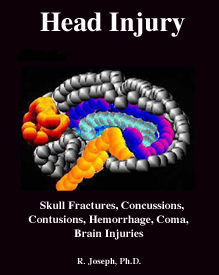
Head Injuries, Concussions & Brain Damage: Cerebral and Cranial Trauma, Skull Fractures….
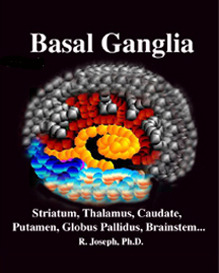
Basal Ganglia, Brainstem, Cerebellum, Striatum, Thalamus: Caudate, Putamen, Globus Pallidus...
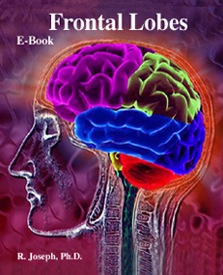
Frontal Lobes: Neuroscience, Personality, Emotion, Language, Alien Hand, Free Will….
Buy From Amazon
Buy From Amazon
Buy From Amazon
Buy From Amazon
Buy From Amazon

Neuroscience
Neuroscience Neuropsychology, Neuropsychiatry, Behavioral Neurology - E-Books
Neuroscience: Neuropsychology, Neuropsychiatry. Introduction...
The Frontal Lobes: Neuroscience, Neuropschiatry, Neuropsychology, Neurology...
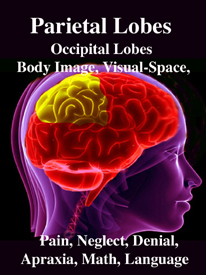
Parietal Lobe: Body Image, Visual Spatial Perception, Language
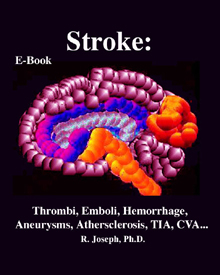
Stroke: Thrombi, Emboli, Hemorrhage, Aneurysms, Athersclerosis, TIA, CVA...
Basal Ganglia, Striatum, Thalamus, Caudate, Putamen, Globus Pallidus, Brainstem...
Limbic System: Hypothalamus, Amygdala, Hippocampus, Cingulate...
Temporal Lobe: Language, Memory, Emotion
Head Injuries, Skull Fractures, Concussions, Contusions, Hemorrhage, Coma...
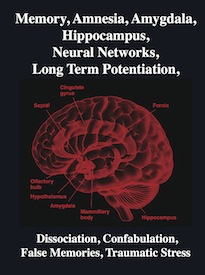
Memory, Amnesia, Amygdala, Hippocampus, Neural Networks…
Free Will and the Frontal Lobes: Loss of Will, Against the Will…
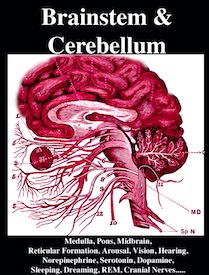
Brainstem and Cerebellum: Medulla, Pons, Midbrain....
Right Hemisphere, Left Hemisphere, Consciousness, Unconscious Mind....

Developmental Neuroscience E-Books
Fetal Cognitive & Brain Development: Normal & Abnormal
Child & Infant Emotional & Cognitive Brain Development
Neuroscience.
Brain & Mind
Introduction, Primer
Development of Consciousness, Language, Emotion & Thought

Consciousness
Development, Quantum Physics, Neuroscience E-Books
Buy From Amazon
Buy From Amazon
Buy From Amazon
Buy From Amazon

Infinity - The Big Bang
Extinctions
E-Books

Infinite Universe: Quantum Physics of Infinity
Extinctions: History, Origins & Future of Mass Extinctions
The Big Bang: A Critical Analysis...


BrainMind.com News


Source: Yale University

Conscious And Unconscious Memory, April 4, 2006

The way the brain stores new, conscious information such as a first kiss or a childhood home is strongly linked to the way the human brain stores unconscious information, researchers at Yale report this month in an article featured on the cover of Neuron.

This finding by Marvin Chun, professor in the Department of Psychology, and his team contrasts with the belief that all explicit (conscious) memory, and implicit (unconscious) memory, has distinct neural bases. The belief that the two types of memory are distinct has been illustrated by examples, including amnesiac patients with damage to the hippocampus and associated brain structures who have severely impaired explicit memory but intact implicit memory.

Instead of looking at how the storage of the two types of memory differs, Chun, Nicholas Turk-Browne, and Do-Yoon Yi focused on the common elements between them. Sixteen men and women viewed 120 photographs and answered which photos were taken indoors or outdoors. Each image was then shown once again. The study used functional magnetic resonance imaging (fMRI) to record brain activity during the test.

Fifteen minutes later the subjects were given a third recognition test, this one unexpected, which included the original 120 photos plus 60 new photos. The subjects' response was again recorded by fMRI. By coding the brain imaging data according to whether the items were subsequently remembered or forgotten, the researchers were able to examine the neural signatures of memory formation.

"Remembered photographs were characterized by strong activation of medial temporal brain regions in response to their first presentation, but reduced activation in the same regions when the photos were repeated," Chun said. This reduction known as repetition attenuation is a well-known signature of implicit memory. The brain signal is not as strong when an image is viewed, remembered, and then viewed for a second time.

"Importantly, only the explicitly remembered photographs produced this weaker signal, demonstrating for the first time that explicit and implicit memory are strongly linked during the encoding of new information in the brain," he said.

Neuron 49: 917-927 (March 2006)


NeuroTheology
Click Here to Purchase
From Amazon.com

Transmitter to God
Click Here to Purchase
From Amazon.com

/a>


BrainMind.com - Contents