BrainMind.com


Neuroscience
Head Injuries, Limbic System, Basal Ganglia,
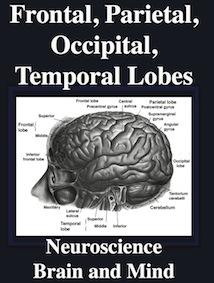
Frontal, Temporal, Parietal, Occipital Lobes
Right & Left Hemisphere

Hardback & Paperback Books

Limbic System: Amygdala, Hippocampus, Hypothalamus, Septal Nuclei, Cingulate
ADVANCED TEXT: Emotion, Cognition, Memory, Development, Language, Abnormal Behavior…
Head Injuries, Concussions & Brain Damage: Cerebral and Cranial Trauma, Skull Fractures….
Basal Ganglia, Brainstem, Cerebellum, Striatum, Thalamus: Caudate, Putamen, Globus Pallidus...
Frontal Lobes: Neuroscience, Personality, Emotion, Language, Alien Hand, Free Will….
Buy From Amazon
Buy From Amazon
Buy From Amazon
Buy From Amazon
Buy From Amazon

Neuroscience
Neuroscience Neuropsychology, Neuropsychiatry, Behavioral Neurology - E-Books
Neuroscience: Neuropsychology, Neuropsychiatry. Introduction...
The Frontal Lobes: Neuroscience, Neuropschiatry, Neuropsychology, Neurology...
Parietal Lobe: Body Image, Visual Spatial Perception, Language
Stroke: Thrombi, Emboli, Hemorrhage, Aneurysms, Athersclerosis, TIA, CVA...
Basal Ganglia, Striatum, Thalamus, Caudate, Putamen, Globus Pallidus, Brainstem...
Limbic System: Hypothalamus, Amygdala, Hippocampus, Cingulate...
Temporal Lobe: Language, Memory, Emotion
Head Injuries, Skull Fractures, Concussions, Contusions, Hemorrhage, Coma...
Memory, Amnesia, Amygdala, Hippocampus, Neural Networks…
Free Will and the Frontal Lobes: Loss of Will, Against the Will…
Brainstem and Cerebellum: Medulla, Pons, Midbrain....
Right Hemisphere, Left Hemisphere, Consciousness, Unconscious Mind....

Developmental Neuroscience E-Books
Fetal Cognitive & Brain Development: Normal & Abnormal
Child & Infant Emotional & Cognitive Brain Development
Neuroscience.
Brain & Mind
Introduction, Primer
Development of Consciousness, Language, Emotion & Thought

Consciousness
Development, Quantum Physics, Neuroscience E-Books
Buy From Amazon
Buy From Amazon
Buy From Amazon
Buy From Amazon

Infinity - The Big Bang
Extinctions
E-Books

Infinite Universe: Quantum Physics of Infinity
Extinctions: History, Origins & Future of Mass Extinctions
The Big Bang: A Critical Analysis...


BrainMind.com News


Source: University of Chicago Press Journals

No Sex Differences in Labor Among Neanderthals, November 30, 2006

Diversified social roles for men, women, and children may have given Homo sapiens an advantage over Neanderthals, says a new study in the December 2006 issue of Current Anthropology. The study argues that division of economic labor by sex and age emerged relatively recently in human evolutionary history and facilitated the spread of modern humans throughout Eurasia.

"The competitive advantage enjoyed by modern humans came not just from new weapons and devices but from the ways in which their economic lives were organized around the advantages of cooperation and complementary subsistence roles for men, women, and children," write Steven L. Kuhn and Mary C. Stiner (University of Arizona).

Kuhn and Stiner note that the rich archaeological record for Neanderthal diets provides little direct evidence for a reliance on subsistence foods, such as milling stones to grind nuts and seeds. Instead, Neanderthals depended on large game, a high-stakes resource, to fuel their massive body mass and high caloric intake. This lack of food diversity and the presence of healed fractures on Neanderthal skeletons--attesting to a rough-and-tumble lifestyle--suggest that female and juvenile Neanderthals participated actively in the hunt by serving as game drivers, beating bushes or cutting off escape routes.

The Middle Paleolithic Neanderthal record also lacks the artifacts commonly used to make weather-resistant clothing or artificial shelters, such as bone needles. Thus, it was the emergence of "female" roles -- subsistence and skill-intensive craft -- that allowed H. sapiens in ecologically diverse tropical and sub-tropical regions to take advantage of other foods and live at higher population densities.

"Earlier hominins pursued more narrowly focused economies, with women's activities more closely aligned with those of men with respect to schedule and ranging patterns," write the authors. "It is impossible to argue that [Neanderthal] females and juveniles were fulfilling the same roles--or even an equally diverse suite of economic roles--as females and juveniles in recent hunter-gatherer groups," they add.

While some degree of niche specialization between adult male and females is documented for many large-mammal species, recent humans are remarkable for cooperative economies that combine pervasive sharing and complementary roles for individuals of different ages and sexes.


NeuroTheology
Click Here to Purchase
From Amazon.com

Transmitter to God
Click Here to Purchase
From Amazon.com


BrainMind.com - Contents