BrainMind.com


Neuroscience
Head Injuries, Limbic System, Basal Ganglia,
Frontal, Temporal, Parietal, Occipital Lobes
Right & Left Hemisphere

Hardback & Paperback Books

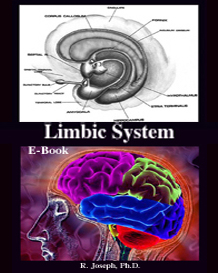
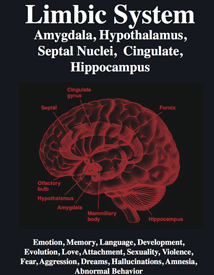
Limbic System: Amygdala, Hippocampus, Hypothalamus, Septal Nuclei, Cingulate
ADVANCED TEXT: Emotion, Cognition, Memory, Development, Language, Abnormal Behavior…
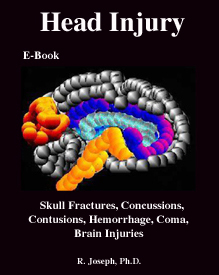
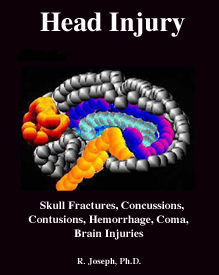
Head Injuries, Concussions & Brain Damage: Cerebral and Cranial Trauma, Skull Fractures….
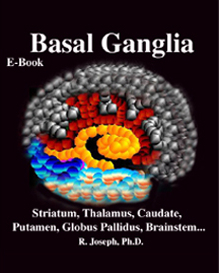
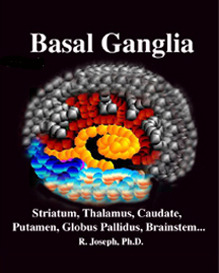
Basal Ganglia, Brainstem, Cerebellum, Striatum, Thalamus: Caudate, Putamen, Globus Pallidus...
Frontal Lobes: Neuroscience, Personality, Emotion, Language, Alien Hand, Free Will….
Buy From Amazon
Buy From Amazon
Buy From Amazon
Buy From Amazon
Buy From Amazon

Neuroscience
Neuroscience Neuropsychology, Neuropsychiatry, Behavioral Neurology - E-Books
Neuroscience: Neuropsychology, Neuropsychiatry. Introduction...
The Frontal Lobes: Neuroscience, Neuropschiatry, Neuropsychology, Neurology...
Parietal Lobe: Body Image, Visual Spatial Perception, Language
Stroke: Thrombi, Emboli, Hemorrhage, Aneurysms, Athersclerosis, TIA, CVA...
Basal Ganglia, Striatum, Thalamus, Caudate, Putamen, Globus Pallidus, Brainstem...
Limbic System: Hypothalamus, Amygdala, Hippocampus, Cingulate...
Temporal Lobe: Language, Memory, Emotion
Head Injuries, Skull Fractures, Concussions, Contusions, Hemorrhage, Coma...
Memory, Amnesia, Amygdala, Hippocampus, Neural Networks…
Free Will and the Frontal Lobes: Loss of Will, Against the Will…
Brainstem and Cerebellum: Medulla, Pons, Midbrain....
Right Hemisphere, Left Hemisphere, Consciousness, Unconscious Mind....

Developmental Neuroscience E-Books
Fetal Cognitive & Brain Development: Normal & Abnormal
Child & Infant Emotional & Cognitive Brain Development
Neuroscience.
Brain & Mind
Introduction, Primer
Development of Consciousness, Language, Emotion & Thought

Consciousness
Development, Quantum Physics, Neuroscience E-Books
Buy From Amazon
Buy From Amazon
Buy From Amazon
Buy From Amazon

Infinity - The Big Bang
Extinctions
E-Books

Infinite Universe: Quantum Physics of Infinity
Extinctions: History, Origins & Future of Mass Extinctions
The Big Bang: A Critical Analysis...


BrainMind.com News


Source: University of Edinburgh

"Survival" Genes: The Key To Healthy Brains? December 5, 2005

Completing a crossword and engaging in a range of activities has long been accepted as a recipe for maintaining a healthy brain. However, the reasons for this have never been clear. Now, scientists at the University of Edinburgh are seeking to identify brain's 'survival' genes which lie dormant in unused brain cells, but are re-awakened in active brain cells. These awakened genes make the brain cells live longer and resist traumas such as disease, stroke and the effects of drugs, and are also critical to brain development in unborn babies.

Their findings could lead to the development of smarter drugs or gene therapies to halt the progress of neurological diseases like Alzheimer's and Parkinson's disease and may also explain, scientifically, the benefits to the brain of maintaining an intellectually and physically stimulating lifestyle in later years.

Dr Giles Hardingham of the Centre for Neuroscience Research at the University of Edinburgh said: "When brain cells are highly stimulated, many unused genes are suddenly reactivated. We have found that a group of these genes can make the active brain cells far healthier than lazy, inactive cells, and more likely to live a long life. These findings also have implications at the other end of life, where maternal drug taking and drinking can cause these survival genes to be turned off in the brain of unborn babies."

Dr Hardingham, who presented this work recently at the prestigious annual meeting for the Society for Neuroscience in Washington DC, explained: "We recently discovered that a critical step in turning on these survival genes involves activating a master genetic controller called CREB. We aim to home in on which of these CREB-controlled genes are crucial in helping the brain cells live longer and become resistant to trauma. By being able to explain at molecular level the basis of brain activity-dependent survival, it will open the way to developing better therapies to help halt the progress of neurological diseases.

He added: "Our work also bears relevance to the potential harm that can befall an unborn baby if it is exposed to substances which suppress its brain activity, like alcohol, and certain drugs like Ketamine and PCP (Angel Dust). The brain cells of young, developing brains are particularly reliant on signals from these 'survival' genes, but these signals are suppressed if their mothers are taking drugs or drinking alcohol.

"This in turn can lead to serious health problems such as foetal alcohol spectrum disorder, which affects up to one per cent of live births in the UK and can cause mental retardation, behavioural problems and diminished growth. Some of this harm may be reduced or minimized if we know exactly how it is taking place."

BrainMind.com - Contents